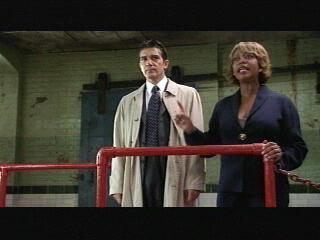
1973 - when I started asking questions, like, "Why are we all dressed so funny?"
Showing posts with label Pedagogy. Show all posts

Wednesday, February 10, 2016

Loewen's LIES


Name Calling Saves Time 

I really thought I could systematically trudge through Jimmie Loewen's Lies My Teacher Told Me for the greater good of humanity and history as it is taught in our high schools, but I just couldn't do it. I felt like I was faced with one of those Jack Chick tracts. Oh, unfamiliar, well, then see below:


Where does one begin? Jack or Jimmie, one is at a loss. "Holy Faulty Premises!" the Boy Wonder never said. Chick has the advantage of having MORE salacious images which is not exactly a compliment, but Chick is more fun.

In any event, the best I can do for now is to point out the following.

Loewen's Lack of Curiosity 

What seems to be missing from the chapter "1493" (and perhaps other chapters but my gag reflex prevented further exploration), is his disinterest in the transformation from slavery as "acceptable" to an "abominable" practice. How did we get here from there? At one point Loewen points out that "everyone was doing it" so to speak so Columbus and friends were not heinous when judged by the mores of their time, but this is one sentence after a catalog of cherry-picked quotations and sources that lead inexorably to the conclusion that most every Spaniard was guilty of malice aforethought and were gleefully committed to rape, pillage and destruction. 

And naturally this was in no small part attributable to their "pious orthodox Catholic" views. Eek! 

When he's not trashing Catholic Christianity, Loewen bleats "racism" to a degree that is reminscient of Orwell's Animal Farm: "White guys bad, brown guys gooood!" 

One reviewer noted that it wasn't worthwhile to catalog all of Loewen's errors and I must concur. Some authors aren't worth refuting. This is one of them. 

Saturday, January 09, 2016

Hidden Curriculum, Hidden Anthropology (Phase I)


I. Critical Pedagogy and Hidden Curriculum

Promoters of "critical pedagogy" sometimes speak of the "hidden" curriculum that is present and assumed within the public or overt teaching that happens day-to-day. Joan Wink writes: "The hidden curriculum is the unexpressed perpetuation of dominant culture through institutional processes" (Critical Pedagogy, p. 46). Wink gives a good example of some Native American kids who think Thanksgiving is the celebration of when white guys taught the Indians how to farm! One could argue that what these students expressed is less about what goes at school than what is received as common "wisdom" from a multiplicity of sources (friends, family, media, etc.). But I digress.

Suffice to say that teachers and schools communicate far more than what is said or read in school. Education is always an "incomplete" process, of course, but what happens when entire fields of human knowledge are ignored? What might one call that? Hmm, unexamined subjects. Perhaps Unsub could be the Newspeak word. Or perhaps the omission of certain subjects are the result of the "hidden anthropology" of public education?

An East German soldier seeks an absent good
What's lacking in the American curriculum?

II. Hidden Anthropology - An Initial Sketch 

If one were to examine K-12 state standards (or Common Core) and ask, "What is omitted?" one would discover some interesting things. First, by "what is omitted?" I mean, What is a substantial field of human knowledge that is neglected or disproportionately small in the curriculum? The next step is to ask, "What do these omissions suggest about the nature of the human person that is assumed by the absence of these subject areas in the curriculum?"

A Premise. This may be so obvious as to seem unnecessary to state: Important things ought to be taught. This statement seems platitudinous, after all, who will argue that education ought to consist in the communication of trivia and frivolity? Hopefully no one. However, this premise could have transformative implications for the public school curriculum if it were taken seriously.

Fields of Knowledge versus State Standards. This is where "Phase II" comes into play. To find the missing like and hence the hidden anthropology. Stay tuned for details.


Monday, December 14, 2015

World War I

Recognize this man? 

I didn't either, but I just read his history of World War I . Coming in at over 400 pages it is not a light read but S.L.A. Marshall's prose is delightful and he's even-handed in his treatment of heroes and villains alike.  

How about this lady? 

Well, this is the actress (Alicia Vikander) who plays Vera Brittain whose memoir Testament of Youth  inspired the film. I confess that when I say the DVD box I was prepared for the worst (can you say, "Atonement"? That turkey should have been called "Crucifixion," for it was exceedingly painful to watch, er, endure).  Don't judge a film by its cover art.

Compare THIS
 with THIS

See how I could get confused?  I'll try not to judge my appearances so much. Testament of Youth is really a film about facing the deepest fears in life and being either destroyed by what happens when the worst possible thing happens or opening to find the deeper meaning in circumstances.

It is wonderfully modest in portraying war's horror and human emotions. It is tasteful, beautiful and profoundly moving.

Definitely a watchable film for say, World History. 

Speaking of World History, here's a nice tune to introduce the rockers in the class to Wilfred Owen's "Dulce et Decorum Est":

Re-contextualizes Owen but I feel the mood in the song.


Thursday, December 10, 2015

Furniture. Or "Saint Ikea, Pray for Us!"


American society at times seems to hinge upon the thesis that buying stuff is "transformative" and necessary for self-realization, so I hate to aid and abet that point of view. However. However, there is something to be said about classroom space.

By space I mean the physical dimensions of the classroom and the arrangement of furniture and its types. Take the typical seat-desk combo found in many schools:
Exhibit A
Sleek, sturdy but of single purpose. Note the fusion of table top and chair (the wire basket underneath is well-intentioned but becomes merely a place that good lose things or place their trash). With this unity of table and chair, there can be no separation. The unit is heavy, unstackable and expansive.

Here is a better alternative: 
Exhibit B
I have come across only one classroom that uses these but they are in service! Notice the adjustable height for starters. Then check out the space saving design (nothing extends beyond the length of the "feet"). Granted, the military hospital green is little dull, but that is far out-weighed by its practicality:

  • Need space in the center of the room? Stack 'em! 
  • Need a way to section off space in the classroom? Arrange 'em! 
  • Need traditional "rows and columns" for a test? Just do it! 
Why is this important? 

Limitations are manifold in teaching. A simple thing like getting students into the right space for learning ought not to be an obstacle. Exhibit A is filled with peril. Exhibit B allows for creativity and flexibility. 

A dude like John Dewey did not have the limitation of reality when he theorized and laboratorized about education. He could tailor make students and their numbers to suit his purposes. He could cherry pick the raw material and be an artist without the constraints we proletarian teachers face. Alas, I need every edge I can get with a classroom of 40 kids. 

Shared Inquiry Discussion

SID is possible with even 40 students and here's how: Rotate 3 groups of students this way: (1) Inner Circle, (2) Outer Circle, Style feedback, (3) Outer Circle, Content feedback.

It needs some fleshing out but problem is solved in the numbers department. 

I have looked closely at every classroom I've subbed in and asked myself, "Could I run a Socratic seminar in here?" For the vast majority of classrooms the answer has been "Not without a big change in the physical layout!"  Next slide:
Image result for classroom high school packed
Exhibit C
Notice this poor teacher. Not only is he shackled with a man-leash but he must feel a bit claustrophobic. There is no space to move. Nowhere to move the furniture, either. 

"Fulcrum, meet Lever. Lever, Fulcrum."  Enough said. The future belongs to the slim and trim table labeled Exhibit B.


Sunday, November 01, 2015

Religion in the Public School - What's Over the Line?

As a substitute teacher I often find myself giving "micro-lessons". on a topic. Recently I was in a Civics class and they were just beginning a unit on the Bill of Rights. "First things first," thought I. Placing things firmly in the hypothetical, I said, "Let us begin this lesson in the name of the Father and of the Son and of the Holy Spirit, Amen. Brothers and Sisters...."

What's wrong with this picture? I asked. "You can't do that," they said. "Right, so where's MY freedom of religion?" A good discussion ensued from there. Rights, responsibilities, teaching versus indoctrinating, the teacher as representative of the State. In short, a glorious can of worms.

This moment led me to go back and re-read this document: A Teacher's Guide to Religion in the Public Schools which has strange bedfellows ranging from the National Education Association to the National Association of Evangelicals. Well worth a read whether one is religiously inclined or not.


Functionally, the above cartoon may be applied to religion in the public schools in an Orwellian way:

IGNORANCE
=
NEUTRALITY

Which would be to not have a grasp of the Court's rulings on the 1st Amendment, religion and the public schools. Sadly, religion does get ignored because it can be contentious, so better ignorance than a hassle, right? Er,...

Saturday, October 24, 2015

Shared Inquiry: setting the stage

Just over a year ago I was entering my second year teaching middle school Religion at a Catholic school. The previous academic year I had sporadic success with Shared Inquiry and decided Socratic seminars were something I needed for my own sake -- if not "for the children."

Now I'm firmly convinced that Socratic seminars are not worth doing if they are done poorly. How then to introduce all of the students to this method?

Enter Big Hair Days

Thank God for the Internet. The Great Books Foundation put out this as part of their introductory materials some years ago but it is still relevant. It gives an overview of a text under discussion ("The Melian Dialogue"), the rationale for Shared Inquiry, the discussion itself, and comments from students after the discussion.

This video helped everyone get on the same page and have a few laughs at the same time. I sometimes give a copy of the selection; other times, I simply summarize the dialogue itself. To help them follow along, I give them some questions to answer and an opportunity to ask questions.

For each section of 6th, 7th and 8th grade I concluded the activity with a question: Do you think you could have conversations like this? If so, do you want to?

Overwhelmingly, kids wanted to. It was a great success. It made AY 2014-2015 more than bearable.


Sunday, May 05, 2013

Deliver Us from "Freedom Writers"

http://content.internetvideoarchive.com/content/photos/849/035693_3.jpg Take the Lead
I went into this movie thinking it would be "pious claptrap" about the saintly teacher who selflessly gives of himself to save beleaguered inner city youth. Ugh, another Freedom Writers?, I thought. Or perhaps a film about a cranky old guy who receives a revelation from today's youth in which he ditches his ways for the "wisdom" of youngsters.   
Films of either genre make my skin crawl.

On the contrary! Although it has some "Oh, come on!" moments (alleged spontaneous dance moments that have been obviously choreographed to death, for example), Take the Lead has an amazing performance by Antonio Banderas who is willing to say (and live out the ideal), "Everyone is entitled to a little culture" (which, from his tradition is...ballroom dancing!).
Not only is "white privilege" not mocked nor scorned, but it is suggested that the ancient things just might have a role in education today. Utterly refreshing.

This film is a meditation on the evocative power of beauty, grace and tradition. Yes, you'll have to suffer from a bit of hip hop (or enjoy it immensely, as I don't).

Wow, perhaps adults do have something of value to pass on; something that does not depend on our effort to make everything "relevant" to kids. Some things, the things of the heart, are always and everywhere relevant for those with a beating heart and an open mind.
Summary: somewhat like Stand and Deliver meets Strictly Ballroom.

Thursday, December 13, 2012

Questions I ask myself as I prepare for a catechetical lesson

 Fourteen Questions to prepare a lesson

Preface: I wrote this for the incoming catechist taking over a Confirmation class. I haven't sat down and thought about how I do what I do when I catechize until now. The elements below that connect to Francis Kelly's “Ecclesial Method” are numbered in bold.

These elements are 1. Preparation, 2. Proclamation, 3. Explanation, 4. Application, 5. Celebration. (Here's a link to Chapter 3 of his book, The Mystery We Proclaim).

1. 2, 3. What is the most important thing to say about the doctrine or theme?

2. 2. How can it be said in a way that is short and memorable?
• The “in brief” sections of the CCC are a great source for short doctrinal statements. Here's an online resource that I use weekly: http://www.scborromeo.org/ccc.htm It has the Table of Contents linked to paragraph numbers, so you can do all kinds of quick searches.)
• Sample proclamation: While looking like simple bread and wine, the Eucharist is the Body and Blood, soul and divinity of Jesus Christ.

3. 2. What is a Bible passage or sentence that connects with the doctrine? Here are three easy to use
sources for cutting and pasting text once you have a Bible passage: http://bible.oremus.org/
http://www.usccb.org/bible/books-of-the-bible/#Genesis
http://www.biblegateway.com/versions/Contemporary-English-Version-CEV-Bible/   I like to use both a “higher” translation and a “lower” when possible, especially if I give the kids a handout.
• Higher (better at the literal level): RSV, NRSV, NAB
• Lower (easier to understand but sometimes the meaning gets lost): CEV, GNT, NIV
A great place to find Bible passages is the Catechism of the Catholic Church

4. 2. When I read a short Bible passage and then state the doctrine concisely, do I have the Scripture and Catechism in harmony? Are they clearly related. One good example and a bad example:
• Good example of proclamation:
◦ [Scripture: John 1:1-14] In the beginning was the Word, and the Word was with God, and the Word was God. He was in the beginning with God. All things came into being through him, and without him not one thing came into being.... And the Word became flesh and lived among us.
◦ [Doctrine: The Incarnation] Jesus is really God and really man (see CCC 480).

• Bad example of proclamation:
◦ [Scripture: Matthew 26:24] “The Son of Man goes as it is written of him, but woe to that one by whom the Son of Man is betrayed! It would have been better for that one not to have been born.”
◦ [Doctrine: Dignity of the Human Person] From the moment of conception, each of us is destined to live with God forever (based on CCC 1711).
Discussion: The passage from St. John teaches exactly what the doctrine proclaims; the passage from St. Matthew actually seems to undermine a discussion of human dignity. Jesus words are directed specifically at Judas, not all of humanity!

5. 3, 4. What are some of the implications of this/these truth/s of the faith? (If 'X' is true, how does 'Y'
follow?)

6. 3, 4. What are some related doctrines? (They are all related! Some are just more obvious – with
junior/senior high school, I go for the obvious ones)

7. 3, 4. Why is this doctrine important? (If it doesn't matter, why tell them?) The doctrine must connect with their lives in some way or it is simply an abstraction.
• So, for example, not just: “Don't sin, it's bad,” but “You were made to be happy and God is the source of all happiness; if you sin, you push yourself away from God and you won't be happy.” More complicated? In a sense, yes, but also more realistic: everything in our culture says “Do what you want,” but our faith says, “Do what will make you deeply and eternally happy – don't be satisfied with easy answers to the questions of your heart!”
Find the deeper meaning.

8. 3, 4. Is there something “out there” in the culture that connects to this doctrine that will help them to see our Faith is not something distant from “the world” but immersed in worldly, fleshy realities and explain worldly things in their true context? Remember, the Word was made flesh, not Idea or
Teaching.
• So, for example, I recently used a clip from the film Signs to show how reality can be interpreted as “for us” or “against us”; it doesn't mean truth is relative, but that our freedom is engaged in the interpretation of reality: If I'm closed from the possibility of God being good, I simply won't see God's goodness; if I'm open, then I can see it.

• Music too is a great resource – and I don't just mean “Christian” music. Also literature or passages from the Bible that kids “act out” or simply read aloud with assigned roles (Just like we do at Mass for the Passion of Our Lord).

9. 4. How can I get them to engage the doctrine with their own lives? (The answer, of course, is “I can't!” This is where there freedom gets engaged. Don't try to force the issue – it'll just piss you off and the student!)
• This can happen in small groups and through questions, but the catechists have to allow “an open space” where students can step into it without feeling like they have to give the right answer.

• Small groups can be a place where students really VERIFY the propositions of Catholic doctrine.

• Or it might happen by asking them to reflect throughout the week on how and if they pray (for example). So, what “provokes” them to pray? Is it part of their lives or something they're told to do or do they not pray at all?

10. 4, 5. Can I put the student in the position of explaining the doctrine? We've used “Demonstrations of Learning” for this purpose. The basic idea is to give them some raw material (Bible, Catechism and doctrine that has already been taught and have them throw together a teaching using everything a hand. This can be through a poem, art, a skit -- whatever.  We did this a month ago and the kids were fantastic when we did this. They know more than we (or they) realize.
• This can also be an opportunity to answer questions and/or clarify misunderstandings
• Be gentle with them; adolescents have fragile egos, so even if they spout off a heresy, treat it gently
and affirm the truth of something they've said

11. 1, 5. Is there a particular prayer that relates to the doctrine? For example, if I talked about the reality of evil and the Devil, how about praying the prayer to St. Michael? This helps us all to experience prayer as something related to reality, not simply a pious exercise.
• Prayer and doctrine go together – we should some this is true by letting them see it explicitly.

12. 3. Am I trying to say too much? In my early days of catechizing, I used to try to say everything in one lesson. That's silly. Get at the core of things: what's really essential? Only 90 minutes are available, so make what you say count and better to explore one doctrine in ways that are interesting than to recite ten doctrines in an abstract way.

13. 2, 3, 4. Am I simply talking too much? Am I afraid of silence and trying to fill it with myself instead let of letting the Holy Spirit speak to me, to the students, to the other catechists? Learning to shut my mouth is a great ascetical practice, but very useful for everyone!

14. 1, 5. The first thing last: Have I prayed that the Lord would guide my steps and purify my heart? Have I “seen” the face of one student as I prepared and prayed for this one kid? Have I begged that this would be an encounter for all of us with the Risen Lord? Yeah, stuff like this is really important. This isn't a technical or professional work only – it is the fruit of prayer.

There you have it: all the "wisdom" I accumulated in earning a Masters in Theology but without the student loan debt! What a bargain.

Email me if you have questions! mjmcguiness@gmail.com

Friday, February 17, 2012

Sometimes soundbites speak volumes...

I caught this on the radio (AM 710, KNUS), but I'll have to paraphrase it because I didn't write it down (nor could I find it on the station's website).
In an interview about a sexually explicit texting case at an area school, the principal said in response to a suggestion that students be barred from bringing cell phones to school, "We can't do that, cell phones are so much of their culture."
Ah, yes. The schools don't have a culture of their own to propose; rather, they are in perpetual retreat against the forces of barbarism. Yet another example of how schools simply react instead of acting.

A simple question: What is the purpose of education? If it is just to keep kids busy, well, then yes, the principal is correct: short of killing each other, let them do what they want. If, on the other hand, school is a place where cultural presuppositions can be challenged, then perhaps the cell phones can and should go. Placate or educate? The choice is ours.

Friday, December 09, 2011

Horace's Compromise

Like Shirer's Rise and Fall, Theodore Sizer's Horace's Compromise was on my "to read" list for some time. I admit that I approached it expecting progressive claptrap about the problem of education being "the man" and how if we can all just learn to get along, education will (some day!) save us from ourselves or other hooey.

On the contrary

This is an amazing book on at least two counts. First, Sizer is able to take his experience of visiting hundreds of schools and distill what are undoubtedly dozens of teachers and students and create composite characters that ring true. Second, Sizer is profoundly realistic about the prospects of meaningful education reform and what that would really mean (versus the babble ABOUT reform coming from all sides).

The prologue alone is worth the price of the book (but it can be found for free at the above link) and I couldn't put it down after reading the prologue. What struck me is how Sizer is able to point out the obvious without condescension or undue criticism: he sees peoples' humanity throughout.

Sizer may not be my new BFF (well, he died two years ago, so that would make it impossible!) but he has given me a lot to chew on. I disagree with him on some things (such as his apparent willingness to equate a secular education with a complete education) but agree whole-heartedly with him on others: teachers must be treated as professionals and as human beings; students must be held accountable and told to figure out more on their own; primacy must be given to the school as a place of intellectual "work" not other things - no matter how noble.

Thoughts - stolen and derived - for a new school

Here's a rough list:
  • Promise to do less but really do it
  • Articulate clearly what is primary and what is secondary, and let the secondary stuff fall away if necessary
  • Avoid at all costs of the never-ending compromise of adding "just one more thing" to teachers' to do lists
  • Writing should be the center of schooling (Hmm, see page 104)
  • Coaching as a task of teachers (and tutors)
  • Teacher to student contact time - keep it somewhere between college professors and what it currently is (gravy, if my counting is right, it was about 32 on paper at MEC - patently absurd, Charlotte & Co.!)
  • Teachers draw out what is inherently interesting in their subjects (versus facile "relevance" or drill and kill)

Much to mull over and explore. Sizer has done something profoundly interesting. May he rest in peace.

Sunday, November 27, 2011

Doing what Dewey discoursed about but decidely did not do

Experience and Education

Years ago (Francis J. Stafford was still the archbishop), Lorenzo Albacete gave a talk to Catholic catechists and school teachers. He spoke about how so many people are running around these days talking about experience but because they are so solipsistic or materialistic, they really aren't talking about experience, per se, but something much smaller and limited.

While re-reading portions of John Dewey's Experience and Education I thought of what Albacete said. Dewey was of course a thorough anti-religionist and materialist, so one wonders if he ought to entitled his book "Interactions and Education" or "Stimulus, Response and Education." This might have cheated him of the opportunity to further devalue the English language, but it might have made for a book with greater clarity.

Etymologically, ex-perience indicates the perception of something that does not originate in me; it has its origin in something other or Other. Thus ontologically one realizes that the self is not the center of reality but that all has been given. Experience in depth opens one to the transcendent; experience with the preconception of positivism leads a flattening of everything -- the center does not hold.

One will search in vain to find a coherent discussion of either education or experience in Experience and Education. But perhaps the title of Dewey's work is useful inasmuch as it points to what should be obvious to everyone: education ought to an experience that means something.

Bring out the Juice...

What Dewey cannot do, Luigi Giussani (aka, "The Juice") does do: dissolve the false opposition between so-called traditional and so-called progressive pedagogies.

Giussani recognized in The Risk of Education that a partial education will tend to be ideological (be it political or religious in nature) and that the goal of human (hence, authentic and complete) education is an education in freedom:
What we want -- and this is our purpose here -- is to free the young generation from mental slavery and from the tendency to conform, which mentally enslaves them to the forces in society (11)
In order to do this he proposes three simple (but by no means easy) premises for a pedagogical approach:
  1. Present the past in a suitable form (tradition)
  2. The content of tradition is discovered in one's own life right here, right now (experience)
  3. Tradition and experience must be reflected upon and judged (criticism) [pages 8-9]
The dominant approaches to education may possess one or sometimes two of these elements, but one does not find a major "pedagogical school" that takes all three into consideration. Thus
  • Progressives may link criticism and experience but neglect to take tradition seriously (e.g., "critical pedagogy" as espoused by the likes of Joan Wink)
  • Traditionalists too may value personal experience via interpretation of a text and surely value traditional/canonical texts but often are superficially critical (e.g., Mortimer Adler's Paideia Proposal)

Giussani has thus discovered (rediscovered?) an approach that prevents teachers from either being "gurus" who know it all or passive-aggressive "facilitators" who push an agenda. Students too benefit by this approach because they are taught something of substance (tradition) and encouraged to relate this to their own life experience and then take the crucial next step:

The young student will now explore the contents of his knapsack, critically comparing what's inside of it -- his received tradition -- with the longings of his heart. The final standard of judgment must be found inside of us, for otherwise we are alienated (9).

What can he possibly mean by the "standard of judgment must be found inside of us"? If you are expecting a shallow relativism, you'll be surprised.

Stay tuned for details for answers to these and other exciting pedagogical topics.


Friday, November 25, 2011

"Convicted"

Such was the term used by friends of old of the protestant/fundamentalist variety years ago to express the voice of their conscience. "The Lord convicted me" or "I'm convicted about 'x'." Very recently I was convicted (or made aware, which is more precise) that I've spent a lot of virtual ink defining what I don't believe with respect to schooling, pedagogy, education funding, etc.; however, what has been lacking are positive proposals.

This awareness was sparked by re-reading Henry Edmondson's John Dewey and the Decline of American education: how the patron saint of schools has corrupted teaching and learning. In it, Edmondson criticizes both John Dewey's strawman approach to his opponents and his inability to clearly articulate his own point of view.

The "opposition-as-idiots" (also known as the fallacy of the straw man) is found especially in "Traditional vs. Progressive Education" in Experience and Education. Dewey opens by noting that people tend to think in extremes and then goes on to speak of "traditional" education as extremely wrong without giving a hint that it may have positive values. No, what is traditional fosters only "docility, receptivity, and obedience" (p. 18).

Dewey speaks of the need to "compromise" and not deal in extremes, but then spends the entire chapter engaging in a series of "either/or's" concerning so-called progressive versus traditional education:

  • To imposition from above is opposed expression and cultivation of individuality; to external discipline is opposed free activity
  • to learning from texts and teachers, learning through experience
  • to acquisition of isolated skills and techniques by drill, is opposed acquisition of them as means of attaining ends which make direct vital appeal
  • to preparation for a more or less remote future is opposed making the most of the opportunities of present life
  • to static aims and materials is opposed acquaintance with a changing world (19).
Dewey's point of view

If Dewey can't seem to move beyond stereotypes (concrete examples are notoriously lacking in Experience and Education; being his defensive re-statement of his views, it would have made a great deal of sense for him to deal in concrete realities rather than abstract notions -- isn't that supposed to his main point, that education ought to experiential?!), neither does he clearly articulate what he means.

My pledge

Thus I shall endeavor to avoid the missteps of Professor Dewey and state clearly what I believe about education and be as clear as possible. In addition, I will do my best to not misrepresent the view points of others. These things I will attempt to do at least frequently, if not always. This is a blog, after all.