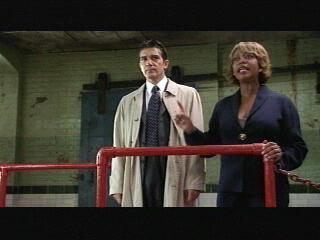
1973 - when I started asking questions, like, "Why are we all dressed so funny?"
Showing posts with label Public Schools. Show all posts

Saturday, January 16, 2016

CSET, English, Subtest IV

These Things I Carried ...

Books, notes, and colorful pens

I was flummoxed by my inability to pass the fourth subtest. I generally test well (I achieved the highest possible score on the GRE written exam), so failing the first and then second time were bitter disappointments. The first time I failed, I attributed it to fatigue: after attending to 100 multiple choice questions on literature, textual analysis, composition, rhetoric, language, linguistics and literacy, and two long essays on these same area, I was done. Having to write four shorter responses to unpredictable questions on topics ranging from drama to media to technology to poetry, graphic design, elocution, stage combat, oral interpretation, pantomime and underwater macrame (OK, officially it's only speech communication, journalism/media, drama, and creative writing, which is diverse enough) after hours of testing was akin to taking the Army's PT test consisting of push-ups, sit-ups and a two mile run, and then completing some activities that require fine motor skills such a Jenga and "pick up sticks."

I couldn't blame my second failure on fatigue. I blew it by misreading the directions. I thought I was limited to no more than 125 words per short response but the direction state clearly that the written response should be "approximately, but not limited to, 75-125 words..."  Ugh. Hence I wasted valuable time paring down my responses to this self-imposed limit and failing to attend to having thorough answers.

The Third Try 
Another unacknowledged unvictim of gender bias?

Excursus

I toyed with idea of filing a class-action lawsuit claiming gender bias on behalf of all the other men who have repeatedly failed this subtest, but that didn't seem like a productive use of time. Did you know that in 2009 nearly 70% of the Ph.D.s in English Lit went to women? Or that around 60% of all secondary teachers in the U.S. are female? That's up 5% from 1999. I could not find statistics on percentages of male versus female high school English teachers but I suspect it's close to 25/75 (merely anecdotal: I've subbed for half a dozen female English teachers but only one male).

The unease I experienced taking and preparing again and again for subtest IV is rooted in this: these four domains (speech communication, drama, media/technology, creative writing) require their own set of competencies. On the test one is asked to do two things well: first, to have a firm grasp of theory and practice on each of them; secondly, to be able to summarily articulate how one would approach a problem in each area. The breadth of this task seems to favor women if the observation is valid that women tend to be better generalists and men specialists.

What is the point of this silliness? Merely to say that complaining is much more fun than buckling down and doing the work require.d to complete a task. I'm glad that I chose the route of work instead of complaining ... this time

Let the games begin...

Instead of launching a frivolous lawsuit, I took an online course (more of a set of resources) from the San Diego County Office of Education which proved really useful. It was $40 for the single subtest, but spending money motivated me to take the test seriously.  I also purchased a test preparation book. The resources are only as good as the effort one puts into studying so made flashcards with key terms and ideas, wrote sample responses to sample prompts, and perhaps what proved most important, I racked my brain to remember relevant teaching experiences and anecdotes. 

Notice the missing checkmark beside drama. This lack was evident in the results.

Just the facts, Ma'am... 

For each of the areas (speech, drama, media, creative writing) I made an outline of how I had taught some aspect of the category before. While not exactly having a "canned" answer, I tried to have a grasp of things that could be quickly recalled and applied to potential questions. Interestingly, as seen above, I passed all three of the areas with flying colors but the feedback I got on drama was "lacking support." Hello, I've never taught drama in my whole life nor do I expect I will. 

Preparing for the speech portion, I outlined an experience I had with adults at a parent-teacher night while a middle school teacher. I used this experience during the test. One of my potential media/technology topics was a beautiful Proctor & Gamble commercial for the 2012 Olympics, which I was able to use. Finally, for creative writing (the essay questions are more about editing or teaching writing), I used a comparison of two narration styles used in two chapters of The Things They Carried: third person omniscient in "The Man I Killed" and first person in "Ambush"). As the paper indicates above, I prepared for at least two scenarios for each of the areas. This preparation was very worthwhile. 

Concerning that drama essay, a note I took after the exam reminded me that the essay question was something about an Oscar Wilde play and what I would do to help students be funny or somesuch thing. Hmm...  I had no clue so I was reduced to blowing smoke.


One last hint

While not explicitly recommended, I chose to go back and read (or more accurately, read for the first time)a half dozen  "classic" high school books. This gave me a lot of familiarity with books that might be alluded to on the exam. This didn't have a big impact on the exam but it was important to do anyway. It boosted my confidence a bunch. Another "final" hint: I read and re-read Shakespeare's Hamlet, Tim O'Brien's The Things They Carried, and Steinbeck's Of Mice and Men. 


Why bother anyway? I'm already certificated in Social Sciences... 

My rationale was straight-forward. About 10% of secondary teachers teach history while a full 20% teach English. Demonstrated competency in these two areas makes me theoretically employable for almost 1/3 of the teaching vacancies. Any minute now I'm expecting that call to come with this invitation: Mr. McGuiness, come pick out your classroom!

Saturday, January 09, 2016

Hidden Curriculum, Hidden Anthropology (Phase I)


I. Critical Pedagogy and Hidden Curriculum

Promoters of "critical pedagogy" sometimes speak of the "hidden" curriculum that is present and assumed within the public or overt teaching that happens day-to-day. Joan Wink writes: "The hidden curriculum is the unexpressed perpetuation of dominant culture through institutional processes" (Critical Pedagogy, p. 46). Wink gives a good example of some Native American kids who think Thanksgiving is the celebration of when white guys taught the Indians how to farm! One could argue that what these students expressed is less about what goes at school than what is received as common "wisdom" from a multiplicity of sources (friends, family, media, etc.). But I digress.

Suffice to say that teachers and schools communicate far more than what is said or read in school. Education is always an "incomplete" process, of course, but what happens when entire fields of human knowledge are ignored? What might one call that? Hmm, unexamined subjects. Perhaps Unsub could be the Newspeak word. Or perhaps the omission of certain subjects are the result of the "hidden anthropology" of public education?

An East German soldier seeks an absent good
What's lacking in the American curriculum?

II. Hidden Anthropology - An Initial Sketch 

If one were to examine K-12 state standards (or Common Core) and ask, "What is omitted?" one would discover some interesting things. First, by "what is omitted?" I mean, What is a substantial field of human knowledge that is neglected or disproportionately small in the curriculum? The next step is to ask, "What do these omissions suggest about the nature of the human person that is assumed by the absence of these subject areas in the curriculum?"

A Premise. This may be so obvious as to seem unnecessary to state: Important things ought to be taught. This statement seems platitudinous, after all, who will argue that education ought to consist in the communication of trivia and frivolity? Hopefully no one. However, this premise could have transformative implications for the public school curriculum if it were taken seriously.

Fields of Knowledge versus State Standards. This is where "Phase II" comes into play. To find the missing like and hence the hidden anthropology. Stay tuned for details.


Monday, December 14, 2015

A Little Push...Military History

Door Number One or Door Number Two?

Frankly, I don't remember which door, but behind one of these years ago was Sherman Oaks Elementary's library. Sometimes I wonder where my fascination with military history came from. Some of it from my father who avidly read about aviation history (which lends itself directly to military history, too).

I recall going to the school library and wanting (really wanting) to read Guadalcanal Diary by Richard Tregaskis. I think the version we had had some pictures but the text was way too dense for my fourth or fifth grade self.

Our teacher gave us time to just browse the library. What a luxury and an education in itself.

Thursday, December 10, 2015

Furniture. Or "Saint Ikea, Pray for Us!"


American society at times seems to hinge upon the thesis that buying stuff is "transformative" and necessary for self-realization, so I hate to aid and abet that point of view. However. However, there is something to be said about classroom space.

By space I mean the physical dimensions of the classroom and the arrangement of furniture and its types. Take the typical seat-desk combo found in many schools:
Exhibit A
Sleek, sturdy but of single purpose. Note the fusion of table top and chair (the wire basket underneath is well-intentioned but becomes merely a place that good lose things or place their trash). With this unity of table and chair, there can be no separation. The unit is heavy, unstackable and expansive.

Here is a better alternative: 
Exhibit B
I have come across only one classroom that uses these but they are in service! Notice the adjustable height for starters. Then check out the space saving design (nothing extends beyond the length of the "feet"). Granted, the military hospital green is little dull, but that is far out-weighed by its practicality:

  • Need space in the center of the room? Stack 'em! 
  • Need a way to section off space in the classroom? Arrange 'em! 
  • Need traditional "rows and columns" for a test? Just do it! 
Why is this important? 

Limitations are manifold in teaching. A simple thing like getting students into the right space for learning ought not to be an obstacle. Exhibit A is filled with peril. Exhibit B allows for creativity and flexibility. 

A dude like John Dewey did not have the limitation of reality when he theorized and laboratorized about education. He could tailor make students and their numbers to suit his purposes. He could cherry pick the raw material and be an artist without the constraints we proletarian teachers face. Alas, I need every edge I can get with a classroom of 40 kids. 

Shared Inquiry Discussion

SID is possible with even 40 students and here's how: Rotate 3 groups of students this way: (1) Inner Circle, (2) Outer Circle, Style feedback, (3) Outer Circle, Content feedback.

It needs some fleshing out but problem is solved in the numbers department. 

I have looked closely at every classroom I've subbed in and asked myself, "Could I run a Socratic seminar in here?" For the vast majority of classrooms the answer has been "Not without a big change in the physical layout!"  Next slide:
Image result for classroom high school packed
Exhibit C
Notice this poor teacher. Not only is he shackled with a man-leash but he must feel a bit claustrophobic. There is no space to move. Nowhere to move the furniture, either. 

"Fulcrum, meet Lever. Lever, Fulcrum."  Enough said. The future belongs to the slim and trim table labeled Exhibit B.


Sunday, November 01, 2015

Religion in the Public School - What's Over the Line?

As a substitute teacher I often find myself giving "micro-lessons". on a topic. Recently I was in a Civics class and they were just beginning a unit on the Bill of Rights. "First things first," thought I. Placing things firmly in the hypothetical, I said, "Let us begin this lesson in the name of the Father and of the Son and of the Holy Spirit, Amen. Brothers and Sisters...."

What's wrong with this picture? I asked. "You can't do that," they said. "Right, so where's MY freedom of religion?" A good discussion ensued from there. Rights, responsibilities, teaching versus indoctrinating, the teacher as representative of the State. In short, a glorious can of worms.

This moment led me to go back and re-read this document: A Teacher's Guide to Religion in the Public Schools which has strange bedfellows ranging from the National Education Association to the National Association of Evangelicals. Well worth a read whether one is religiously inclined or not.


Functionally, the above cartoon may be applied to religion in the public schools in an Orwellian way:

IGNORANCE
=
NEUTRALITY

Which would be to not have a grasp of the Court's rulings on the 1st Amendment, religion and the public schools. Sadly, religion does get ignored because it can be contentious, so better ignorance than a hassle, right? Er,...

Saturday, October 31, 2015

Questionable Music: an Alternative to Despair

What happens when students have had three weeks of random substitute teachers?

A flippant response would be, "Nothing good!" That is close to the money, but I had a chance to sub this week for a week's worth of lessons. It's an unfortunate situation when a teacher has an unforeseen situation and it doesn't quite merit a long-term sub. The teacher suffers, the subs suffer, and the students become disoriented and -- some -- become derisive and cynical.

After the second day with these students, it was clear that something beyond worksheets was required. (We had just finished the French Revolution and it seemed to me to be a distinct possibility that if I handed them another worksheet, I might be ascending the steps to the Guillotine!)

The curriculum called for moving into the Industrial Revolution and remember subbing a few weeks before for a psychology teacher in Roseville. I played the video. The video was about memory and how the mind remembers best when there is a context. In the video, one of the shrinks spouted off a set of random numbers and asked us, his audience, to remember them: 1-7-7-6-1-8-1-2-1-8-6-1-1-9-1-4-1-9-4-1, Impossible. But then he said, "American history." Ah, yes, key dates in America history. Easy to remember.

Remembering this, I thought, "How do I give a simple but memorable introduction to the Industrial Revolution?"  I found a catchy (or perhaps irritating if you have taste in music) music video on YouTube and two other songs (one on consumerism, the other on oppressive work).

It was more interesting for me than another worksheet. Based on our discussions in class, same for some of the students.

Industrial Revolution Musical Retrospective


Sunday, October 18, 2015

The MacGyver School of Education

Being a substitute teacher gives daily opportunities for improvisation.


This quotation was given as the warm-up for a series of World History classes:
Success is not final, failure is not fatal: it is the courage to continue that counts. ~Winston Churchill.
I love it when the permanent/regular teacher gives me just enough raw material to do something interesting but not so much that I'm constrained by a kind of punch-list. There is always the possibility of teaching a bit of something, be it historical background or human frailty.

This quotation was a springboard into the live of Winston Churchill during one class period (a slightly abridged version of his life and times).  Fortuitously, I had recently read Roy Jenkins' Churchill.


Jenkins really brings out Churchill's virtues and vices, his triumphs and defeats. A man, a fallen man, a great man. For one class, I went a bit overboard in my peregrinations. I noted that despite his gargantuan ego and other unlikable qualities, Winston was a man who could see through Hitler. It might be (or not) an overstatement to say he was responsible for saving Europe (and hence, North America) from totalitarianism, but his rise to Prime Minister meant that England held the line against the Nazi war machine and Hermann Goering's incompetence was brought to light. The Battle of Britain was a turning point, though this was not obvious at the time.

Yet having so much background knowledge can take me over the line. Alas, I had a bit of a "Smokey" moment...  [viewer discretion advised]


I had gone on and on (Over the line!), and then set the students to work on their jigsaw activity on the French Revolution. Time is a finite quantity and when I called "Time," a shy but intelligent girl pointed out, "We spent too much time on the warm-up, and we need more time to complete our piece of the revolution." Indeed. Well, "Walter" has taught me that when the facts of the case are clear, one bows to reason despite the desire to press ahead. I gave the class a more reasonable amount of time to complete their tasks.


Thursday, September 24, 2015

Substitute Teaching: Entry #1

I'm at roughly the two week point as a substitute teacher in three nearby school districts and it has been an adventure. I've been quite fortunate in that I've been able to (a) work every day I've wanted to, and (b) have good choices with regard to the assignments.

Based on my experiences to date, I have to say that a bit of my pessimism about the fate/future of Western culture/civilization is being rolled back.


Take the foundational document, er, film, The Sandlot. I made reference to it at one of those periodic moments of exasperation and several students replied, "I love that movie." Warm. Fuzzy.

More seriously, I'm finding that students take an interest in what they're studying, and, when conditions are really good (there's the Mystery of Teaching, namely, what creates or allows for these conditions to emerge? Patent that and send the bill to Bill and Melinda or that facebook fool), we engage in real dialogue.

And despite the negative chatter I read about Common Core, kids are reading actual literature and historical texts, not merely IKEA how to assemble instructions (as "real world" as that kind of learning might be -- but is there really a world-wide shortage of those little Swedish Gnomes who make that furniture? I doubt it)! Examples of texts I've read with students recently:

  • Hamlet
  • Jonathan Edwards, "Sinners in the Hands of an Angry God"
  • Harper Lee, To Kill a Mockingbird 
Yes, real literature, real language real transmission of a tradition.


Sunday, May 05, 2013

Deliver Us from "Freedom Writers"

http://content.internetvideoarchive.com/content/photos/849/035693_3.jpg Take the Lead
I went into this movie thinking it would be "pious claptrap" about the saintly teacher who selflessly gives of himself to save beleaguered inner city youth. Ugh, another Freedom Writers?, I thought. Or perhaps a film about a cranky old guy who receives a revelation from today's youth in which he ditches his ways for the "wisdom" of youngsters.   
Films of either genre make my skin crawl.

On the contrary! Although it has some "Oh, come on!" moments (alleged spontaneous dance moments that have been obviously choreographed to death, for example), Take the Lead has an amazing performance by Antonio Banderas who is willing to say (and live out the ideal), "Everyone is entitled to a little culture" (which, from his tradition is...ballroom dancing!).
Not only is "white privilege" not mocked nor scorned, but it is suggested that the ancient things just might have a role in education today. Utterly refreshing.

This film is a meditation on the evocative power of beauty, grace and tradition. Yes, you'll have to suffer from a bit of hip hop (or enjoy it immensely, as I don't).

Wow, perhaps adults do have something of value to pass on; something that does not depend on our effort to make everything "relevant" to kids. Some things, the things of the heart, are always and everywhere relevant for those with a beating heart and an open mind.
Summary: somewhat like Stand and Deliver meets Strictly Ballroom.

Saturday, February 18, 2012

A Meaningful Education

This was published in the web edition of the Denver Post on 11/27/11 (here the link)

Link

I was recently at our local public library and overheard two high school girls discussing teen pregnancy. Why, they wondered, would a girl do that? I had to bite my lip to not offer my opinion: "They get pregnant because it's more interesting than school."

Motherhood — even teen motherhood — is both an adventure and an opportunity filled with possibility. It promises a new life, the deepest affection thinkable (that of mother and child), and, yes, possibly great peril. Through pregnancy, the teenager enters into a dramatic story.

The story public schools tell girls (and boys) is decidedly less interesting. It is the story of so-called success through studying hard and getting a good job. For those students who — because of habit or incuriousity — are content to study bits of knowledge disconnected from each other, public education "works": they study hard, get good grades, get accepted to college, finish college and (perhaps) get a decent job.

For many other students, this vague success narrative is neither appealing nor credible. It is no wonder that so many are drawn to drugs, alcohol, bad music, video games, and promiscuity. Beyond the anesthesia, these things provide a guide for life which is more compelling than the tale of economic utility and suburban respectability. Since the schools won't provide an interesting or compelling hypothesis of meaning, the kids find one ready-made or invent one.

Some will argue that the role of public schools is not to dabble in questions of meaning or anthropology or, heaven forbid, metaphysics, but it is obvious to any clear eyed observer that they have been doing this for some time. The meaning of life as envisioned by the public school system has already been summarized: you exist to be a productive member of society; whatever else you do is up to you.

The tacit anthropology is that the student is a weird hybrid of snowflake and machine: utterly unique but capable and urged to emit correct responses that the teacher-technician has inputted. Metaphysically-speaking the schools flail about in a case of terminal agnosticism: God may or may not exist, but in a clever reversal of Pascal's Wager, it is best to bet everything on the chance that He does not.

For more than ten years I taught in public schools: one prison and three high schools (in four different cities). One might think I saw a great deal of diversity (I did), but the underlying assumptions of these four institutions was fundamentally the same. Two major assumptions are that the person needs a lot of information but very little else, and that education can be separated from the question of what makes for a good life.

In the midst of my present "sabbatical," I've had the opportunity to teach some homeschooled Catholic high schoolers and the contrast with them and their public school contemporaries is amazing. They are bright, curious and open; they are not sullen and bored. The homeschooling parents aren't rich but they have communicated a rich hypothesis of meaning to the kids and the kids have an opportunity to verify something concrete and definite about life.

Such possibilities ought not to remain the privilege of the rich or those willing to make huge familial sacrifices. It is imbedded in our nature to seek the meaning of our lives.

Some find that meaning in religion while others find it in irreligion. Some find it in the "bad infinity" of pursuing wealth and shopaholicism.

Still others find the present public secular education perfectly acceptable because existential questions are of no interest to them. The point is this: if we take the idea of American pluralism seriously, this pluralism ought to extend into K-12 education. If the State cannot do this (for whatever reason), perhaps the State needs to get out of education.

Or, if not out entirely, then it may be necessary to radically reconfigure how the government funds education so that the idea that parents (not the State) are the first and irreplaceable educators of their children is properly supported. This isn't rocket science; it's simple democracy.

Matt McGuiness is a freelance instructor. He can be reached at mjmcguiness@gmail.com.

Friday, December 09, 2011

Horace's Compromise

Like Shirer's Rise and Fall, Theodore Sizer's Horace's Compromise was on my "to read" list for some time. I admit that I approached it expecting progressive claptrap about the problem of education being "the man" and how if we can all just learn to get along, education will (some day!) save us from ourselves or other hooey.

On the contrary

This is an amazing book on at least two counts. First, Sizer is able to take his experience of visiting hundreds of schools and distill what are undoubtedly dozens of teachers and students and create composite characters that ring true. Second, Sizer is profoundly realistic about the prospects of meaningful education reform and what that would really mean (versus the babble ABOUT reform coming from all sides).

The prologue alone is worth the price of the book (but it can be found for free at the above link) and I couldn't put it down after reading the prologue. What struck me is how Sizer is able to point out the obvious without condescension or undue criticism: he sees peoples' humanity throughout.

Sizer may not be my new BFF (well, he died two years ago, so that would make it impossible!) but he has given me a lot to chew on. I disagree with him on some things (such as his apparent willingness to equate a secular education with a complete education) but agree whole-heartedly with him on others: teachers must be treated as professionals and as human beings; students must be held accountable and told to figure out more on their own; primacy must be given to the school as a place of intellectual "work" not other things - no matter how noble.

Thoughts - stolen and derived - for a new school

Here's a rough list:
  • Promise to do less but really do it
  • Articulate clearly what is primary and what is secondary, and let the secondary stuff fall away if necessary
  • Avoid at all costs of the never-ending compromise of adding "just one more thing" to teachers' to do lists
  • Writing should be the center of schooling (Hmm, see page 104)
  • Coaching as a task of teachers (and tutors)
  • Teacher to student contact time - keep it somewhere between college professors and what it currently is (gravy, if my counting is right, it was about 32 on paper at MEC - patently absurd, Charlotte & Co.!)
  • Teachers draw out what is inherently interesting in their subjects (versus facile "relevance" or drill and kill)

Much to mull over and explore. Sizer has done something profoundly interesting. May he rest in peace.

Sunday, November 27, 2011

One small step...

It's only what I can conceive of in terms of providence: the Denver Post published a guest commentary by me for their online edition. This is my attempt to articulate the logical connection between school funding and a meaningful education in 21st century America. The full article can be found via the above link.

Saturday, November 19, 2011

What's so "public" about public education?

It seems to me that what is meant by "public" in public education is something rather diminutive and it certainly is not something that takes into account the values of most parents.

Public is governmental is secular. Another way to put this is that public education as it is currently configured is partial at best. It is not rooted in a particularly strong hypothesis of meaning nor does it generally even admit that it possesses one.

Should education be restricted to a certain, limited view of things or should it be a window that opens to all of the real? The Austrian Jesuit, Joseph Jungmann insisted that "education ought to be an introduction to the whole of reality." I've had secular educationists "agree" with me on this definition of education, but that was because their view of reality is truncated: secular reality is all they see.

The choices of inclusion and exclusion in what is considered "public" in our schools is very interesting:
  • anthropology, biology is included but spirit is excluded
  • metaphysically, the schools exude a soft agnosticism and fundamental questions such as "Does God exist?" are systematically avoided.
The regime of agnosticism makes "practical" sense because if students discovered God existed, where would we put Him [or Her] in the present curriculum?

But let's leave God out this for the moment. After ten years of teaching in the public schools I found it amazing that few teachers recognized that they themselves communicated a hypothesis of meaning to their students. It is as obvious as air and thus can similarly be taken for granted. What I observed in my colleagues was a hypothesis that went something like this:
  • if you study hard and go to college, you'll get a good job
Pretty thin gruel, that. I don't blame the teachers per se for promoting this view: they breathe it as we all do. We are all implicated in a culture we did not create. American culture is notoriously superficial and it is difficult to tell if that is because of public education or that our culture drives superficiality into education. Methinks it's a symbiotic relationship.

There are more adequate hypotheses (Neil Postman characterizes these as "gods" or stories or narratives in The End of Education) and not all of them are "faith-based." How so many intelligent and educated people can think that students can be truly and completely educated without having a clue about the meaning of life is something that I am not wise enough to puzzle through.

That the hypothesis of economic utility is ultimately empty and, literally, incredible, is evidenced by the indifference of the denizens of public high schools. Indifference? Life is a wonderful, mysterious adventure but the soft nihilism we preach in school leaves students bored and flaccid.

(This post is based on my response to a blog post by Deborah Meier in "Bridging Differences" in Education Week.)

Thursday, November 17, 2011

Grades

We received all of the first trimester grades yesterday. The results are mixed. One of our kids did "poorly" in several subject areas and yet I know he is bright and thoughtful. I also have a suspicion that may be why he did poorly grade-wise.

Poor grades can be a noble act of rebellion. The motive for disengaging can be "I'm not buying this crap." As a kid, what alternatives do you have? Adults can change majors or careers but middle school kids are stuck.

Now the task is discover the root of the lame grades.

Friday, November 11, 2011

Distracted from distraction by distraction

T.S. Eliot called it a place of disaffection, but young people generally call it "boredom." Somewhere Walker Percy traces the origin of the word to 14th century France. Apparently it's related to the word "to stuff." Thus one who is bored is over-stuffed with something. I witnessed a sample of that "something" recently at a local public library.

LinkA high school student arrived at a vacant desk popped open her binder and began to study (or so I thought). Three or four minutes must have elapsed. She pulled out a cellphone and chattered thus: "What are you doing? Do you want to come to the library? I'm so bored."

There is a wonderful but disturbing scene in Fight Club in which Tyler Durden (Brad Pitt) kisses and then sprinkles "Rupert's" hand with lye. The pain is, of course, unimaginable. Tyler tells Jack: This is the greatest moment of your life and you're off somewhere in La-La Land, missing it.

That is the scene that popped into my head at the library. The ubiquity of technology strips us of patience, which is always a kind of suffering.

Friday, November 04, 2011

The Hubris of Low Expectations

I recall a Catholic retreat I attended in the early '90s while attending Metro State. The theme was "Peace, Peanut Butter and Cooking with Jesus." I'm not even kidding. One can well imagine the content and spirit of such a retreat!

Nevertheless, the retreat was useful in this sense: I met two people who had a benevolent influence on me (Ann Brna and Mike McManus). The latter had this to say: God, we're surrounded by theological midgets! This brief aphorism captured my feelings perfectly. I remember it often when I think of education reform.

Generally one thinks of the hubristic in terms of over-reaching or some form of presumption in the extreme: Hitler waging war on two fronts, Gary Hart daring reporters to follow him around, Bernie Madoff creating his elaborate Ponzi scheme, etc.

But when it comes to public education, we seem to suffer from chronic under-reach: we have no vision but the technical and all of these various techniques (often manipulative of the students) are not related to any other greater meaning. I groan inwardly when I hear teachers emphasizing college for their charges. "Alas," methinks, "Do you think deferring questions of life's meaning is useful for anyone?"

Somewhere Scripture has it: My people die for lack of vision. There's the education crisis in a nutshell: not what and how, but why. Finding the missing why is the key to education reform.

Thursday, November 03, 2011

Vilifying Voucherites


There is much to criticize in this commentary by John Young in last Sunday's Denver Post, but these four sentences are surely the most egregious:
They want their children associating with "people like me," as opposed to "those people."
And contrary to any other rhetoric, that's the No. 1 reason why some are so dedicated to the concept of school vouchers. It's not about education. It's about association.
There was a radio show from long ago that went something like this: Who knows what evil is in the hearts of men? The Shadow knows. Since he offers absolutely no evidence for this claim, one must conclude it is based upon an assumption or that John Young and The Shadow are really the same person.

Freedom of Association

Even supposing that it is true that some parents have "klannish" or racist intent, is that an argument against vouchers? The medieval maxim puts it this way: The abuse of something does not abrogate its legitimate use. But according Mr. Young freedom of association ought not to be universally available -- at least to parents of modest means.

An Existential Turn

I have no idea what kind of parent Mr. Young is -- did he (or does he) monitor the kind of relationships his kids had at school? Did he suggest that playing with bookish students might be a tad better than hanging out with kids doing meth? Gosh, that would constitute a kind of discrimination now, wouldn't it? Yes, discriminating between caring for a child or neglecting the child.

It is curious that someone who has been awarded recognition on more than one occasion by Planned Parenthood -- that great protector of choice, albeit, oh so narrowly defined -- is so "anti-choice" when it comes to the formation and education of the young. Are we to believe that mothers can be trusted to have their child "associate" with an abortionist in utero but not entrust a mother with that freedom after a child is born?

No, Mr. Young, vouchers are about education and the freedom of parents. Yes, there will be (because there are already) racists in the apple barrel. Such is life and such is the nature of freedom: the ability to make wrong-headed choices.

Why do you want to limit the freedom of parents? Why is it that you support millions in taxpayers' dollars going into that "non-profit" killing machine called Planned Parenthood but utterly reject a few farthings for schools like Christian Valor?

Monday, October 31, 2011

Where's "Atheist Academy"?

Alas, even Richard Dawkins is not interested in starting a school for atheists.

Call me cynical, but is it because atheists don't think they themselves believe in anything worth communicating to others? No, the flood of books on the market by these evangelical atheists ("the good news is, life is meaningless") would disprove that theory.

Surely the atheists are morally upright and concerned about the future, and hence about education. Why no charter school with a STEM focus? Or a private school founded by a rich atheist (surely God doesn't just bless the theists!)?

Perhaps the reason is that they are happy with the public schools. Seriously.

Why start a school that incessantly talks about the God Who Isn't (as an atheist school presumably would) when you can send your child to a school that simply ignores that same Non-God? Ideally, an atheist might prefer an Atheist Academy, but Agnostic Public School works just as well and it's a lot more convenient.

Tuesday, September 06, 2011

News! Masters become Slaves...

It is known by everyone who was taught in a public school that there are really only two ways to make more money (three if you count going into administration): (1) years of creditable service or "time served" and (2) education. Time flows at a constantly velocity, so one can not accelerate the years, but moving up the pay scale is something one can do by taking graduate courses or by earning a Masters or Ph.D.

Here's something curious: full-time teachers in a full-time graduate program. Hmm, does anyone really think it is possible to have the cake and eat it too? The "system" would seem to believe it, for otherwise a provision outside of this insanity of working full-time and going to school full-time would not be encouraged.

Two cases:

Case #1: Jennifer J. (a social studies teacher at a Denver high school). Jennifer was in a media and technology class taught by David Hildebrand at the University of Colorado, Denver. It was a fascinating class. Texts included Albert Borgmann's Holding On to Reality: The Nature of Information at the Turn of the Millennium, Neil Postman's Amusing Ourselves to Death and other works. One evening I was talking to Jennifer after class and she was really angry at the professor. Apparently he had said that in his opinion she was trying to do too much and that her academic work was suffering as a consequence. I asked her, "Well, what are you getting out of this course? How did your last paper go?" She said with work and the course, she was just having trouble concentrating, but she was sure if the professor would just give her more time, she could get it all done. In other words, Doctor Hildebrand was correct!

Case #2: Myself. While working at a charter high school in the Denver area I was working on my alternative teaching license. As I recall, we had classes every other Saturday with a lot of reading and analysis in between. It was a lot and it trivialized teacher education. Not necessarily by design (though it does not take a rocket scientist to realize that if one is doing full-time graduate work AND holding down a full-time job that one of these will suffer), but certainly by consequence. I tried to balance the demands of the job and of the program, but both suffered to some degree. Naturally, my family suffered, too as I became increasingly insufferable that year.

What did I really learn in an alternative teacher program? My biggest "lesson learned" was that public education is extremely superficial. For all the reams of data and analysis, education is seen to be about technique, not passion; manipulation, not wonder.

What is the meaning of this post's title -- Masters become Slaves? It is only this: by encouraging teachers to work and to study to the point of exhaustion, sheer frenetic activity is encouraged and thought is siphoned off. If education is a "communication of yourself" (Julian Carron), then teachers willy-nilly communicate their own busyness to their students.

In other words, stressed-out teachers keep their nose to the grindstone and encourage their students to do likewise. The message is "It's not who you are that matters, but what you do."

Rather than facing the riddle of existence, it's "busy, busy, busy" (as Kurt Vonnegut has it in Cat's Cradle). Or as those of a more theological mind have put it: Bad Infinity -- the multiplication of the finite (be it sex or shopping or booze) to make up for one's own nothingness, one's lack.

That's how slavery gets perpetuated.

Friday, August 26, 2011

The McNamara Effect

In his fascinating history of the United States Air Force, Walter Boyne discusses the priorities of Robert Strange McNamara that "created a climate of fear and [placed] a value on reporting rather than on doing."

Boyne continues:
Numbers -- whether it be of the bodies counted, sorties flown, bombs dropped, or Congressional delegation visits -- became the be-all and end-all of the military system McNamara shaped.

Report numbers were transformed from black dots on a page to truths that were quantified, defended, and extrapolated from.

Whole bureaucracies sprung up to create the numbers, challenge them, and mold them into new requirements for more numbers (Beyond the Wild Blue, 2nd ed., p. 160).

Any teachers out there who can relate to a climate of fear and an obsession with "measurable outcomes" and "growth"? I can sure relate to it. We know what the McNamara Effect was on that war in Indochina: hundreds of thousands of soldiers and civilians dead for no purpose.

What the end game is for public educators who embrace McNamara's approach is yet to be seen. I'm betting Ho Chi Minh wins.